






Let me tell you a story about the first time I truly understood the magic of crank lures. It was a crisp fall morning on Lake Okeechobee in Florida. The air was cool enough to see my breath, and the lake’s surface was calm as glass. I’d been out on the water since dawn, casting everything from jigs to plastic worms, but the bass just weren’t biting.
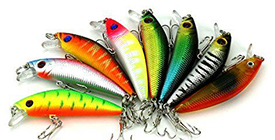
My buddy, Jake, who’d been fishing this lake for over 30 years, sat next to me in his well-worn bass boat. “You’re overcomplicating it, Tex,” he said, handing me a bright orange LENPABY crank lure with black stripes. “Try this. Cast it near that submerged dock and reel it in slow. Let it do the work.”
What Makes Crank Lures So Effective?
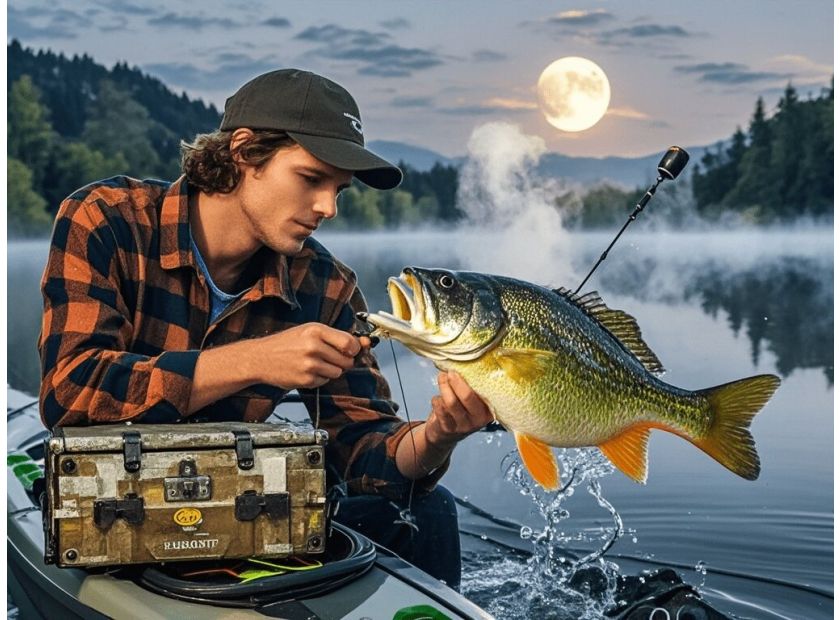
I did as Jake suggested, casting the lure toward the dock and reeling it in at a steady pace. Within seconds, I felt a powerful tug on my line. The rod bent nearly in half as a 5-pound largemouth bass fought to break free. That day, I caught more bass than I had in the entire month before, all using that simple crank lure.
Crank lures, also known as crankbaits, are designed to mimic the movement of injured baitfish, which triggers the predatory instinct in bass, pike, walleye, and even trout. The secret lies in their diving lips, which cause them to plunge to specific depths when retrieved. This makes them incredibly versatile, allowing you to target fish in shallow coves, deep channels, or anywhere in between.
The Different Types of Crank Lures
Not all crank lures are created equal, though. They come in various shapes, sizes, and colors, each designed for specific fishing conditions. Let’s break them down:
Shallow Diving Crank Lures
These lures have short, stubby diving lips and typically dive to depths between 2-5 feet. They’re perfect for fishing in shallow coves, near the shoreline, or around emergent vegetation like lily pads and cattails. On a recent trip to Lake Michigan, I used a shallow diving LENPABY crank lure to catch smallmouth bass near rocky shorelines at water temps around 58°F.
Medium Diving Crank Lures
With slightly longer diving lips, medium diving crank lures reach depths between 5-12 feet. They’re ideal for fishing over submerged structures like humps, ledges, and rock piles. I’ve had great success using them on Lake Texoma in Texas, where the water temps hovered around 65°F. The bass were schooled up near 10-foot ledges, and the medium diving crank lure was the perfect tool to reach them.
Deep Diving Crank Lures
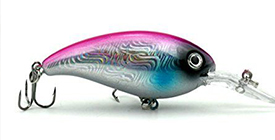
These lures have long, angled diving lips that allow them to reach depths of 12 feet or more. They’re designed for fishing in deep channels, main lakes, and around large underwater structures like sunken trees and bridges. During a hot summer day on Lake Erie, when the water temp was a scorching 78°F, I used a deep diving crank lure to catch walleye at 20-foot depths near a sunken barge.
Choosing the Right Crank Lure for the Conditions
The key to success with crank lures is choosing the right one for the conditions you’re fishing in. Here are some tips to help you make the right choice:
- Water Clarity: In clear water, use natural-colored crank lures that resemble the baitfish in the lake. In murky or stained water, opt for bright colors like chartreuse, orange, or red, which are more visible to fish.
- Water Temperature: Cold water (below 55°F) requires a slow, steady retrieve to mimic lethargic baitfish. Warm water (above 65°F) calls for a faster retrieve to match the active movement of prey.
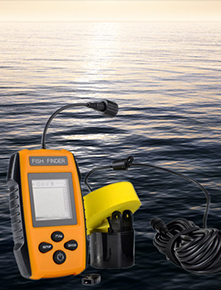
- Fishing Depth: Match the crank lure’s diving depth to the depth of the fish you’re targeting. Use a fish finder to determine where the fish are holding, then choose a lure that can reach that depth.
My Favorite LENPABY Crank Lures
Over the years, I’ve tried countless crank lures from various brands, but LENPABY crank lures have consistently outperformed the competition. Their attention to detail, quality construction, and realistic designs make them a staple in my tackle box.
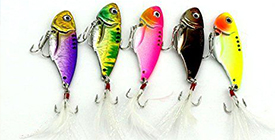
One of my go-to LENPABY crank lures is the “Fire Tiger” pattern. With its vibrant orange, black, and green colors, it’s incredibly effective in both clear and murky water. I’ve caught everything from largemouth bass on Lake Okeechobee to smallmouth bass on Lake Michigan using this lure.
Another favorite is the “Bluegill” pattern, which perfectly mimics the look and movement of a bluegill, one of the most popular forage fish for bass. On a trip to Lake Texoma in Texas, I used this lure to catch a 7-pound largemouth bass near a submerged tree at a water temp of 68°F.
The Art of Retrieving Crank Lures
Choosing the right crank lure is only half the battle; you also need to know how to retrieve it properly. Here are some common retrieval techniques:
Steady Retrieve
The most basic and effective technique is the steady retrieve. Simply cast the lure out, let it sink to the desired depth, and reel it in at a consistent speed. This works well in most conditions, especially when fish are actively feeding. On a recent trip to Lake Erie, I used this technique to catch walleye at 20-foot depths.
Stop-and-Go Retrieve
For more finicky fish, try the stop-and-go retrieve. After casting the lure out, reel it in for a few turns, then pause for 1-2 seconds. Repeat this pattern throughout the retrieve. The pause mimics an injured baitfish, which can trigger aggressive strikes. I used this technique on Lake Michigan in June, when water temps were around 62°F, and caught several nice smallmouth bass.
Bumping Structure
Crank lures are also effective for “bumping” submerged structures like rocks, logs, and ledges. When the lure hits a structure, it will pause briefly, then continue moving. This pause can trigger a strike from nearby fish. On Lake Okeechobee, I used this technique to catch bass near sunken trees at water temps around 72°F.
Common Mistakes to Avoid
Even experienced anglers can make mistakes when using crank lures. Here are some common pitfalls to avoid:
- Using the Wrong Line: Heavy line can prevent your crank lure from diving to its full potential. I recommend using monofilament or fluorocarbon lines in 8-12 lb test for most crank lure fishing.
- Reeling Too Fast or Too Slow: Match your retrieve speed to the water temperature and the activity level of the fish. In cold water, reel slowly; in warm water, reel faster.
- Not Varying Your Technique: If one retrieve technique isn’t working, don’t be afraid to switch things up. Try changing your retrieve speed, adding pauses, or bumping structure.
Crank Lures vs. Other Lure Types
While crank lures are incredibly effective, they’re not the only option in your tackle box. Let’s compare them to other popular lure types:
Crank Lures vs. Jigs
Jigs are great for fishing in heavy cover and around structure, but they require more technique to use effectively. Crank lures, on the other hand, are much easier to use and can cover a lot more water in a shorter amount of time. I typically use jigs in thick vegetation or around submerged logs, and crank lures for open water fishing.
Crank Lures vs. Plastic Worms
Plastic worms are a staple in every bass angler’s tackle box, and for good reason. They’re incredibly versatile and can be fished in a variety of ways, including Texas rigging, Carolina rigging, and wacky rigging. However, plastic worms require more patience and finesse to use, whereas crank lures are more “set it and forget it.” I use plastic worms in slower conditions or when fish are less active, and crank lures when they’re actively feeding.
Crank Lures vs. Frog Lures
Both crank lures and frog lures have their place in an angler’s tackle box. Frog lures are specifically designed for fishing in heavy vegetation like lily pads and cattails, where they can skip across the surface. Crank lures, on the other hand, can be used in a variety of conditions, including open water. I use frog lures in thick vegetation and crank lures for everything else.
Crank Lure Success Stories
Over my 20 years of fishing, I’ve accumulated countless success stories using crank lures. Here are just a few:
Lake Okeechobee, Florida – Largemouth Bass
On a trip to Lake Okeechobee in Florida, I used a LENPABY crank lure with a “Fire Tiger” pattern to catch over 20 largemouth bass in a single day. The water temp was around 72°F, and the bass were schooled up near submerged grass beds in depths of 3-5 feet. The bright colors of the lure stood out against the murky water, triggering aggressive strikes from the bass.
Lake Michigan, Wisconsin – Smallmouth Bass
While fishing in Lake Michigan near the Door County Peninsula, I used a shallow diving LENPABY crank lure to catch smallmouth bass near rocky shorelines. The water temp was around 58°F, and the bass were feeding on small baitfish near the surface. The lure’s realistic movement and natural colors made it almost impossible for the bass to resist.
Lake Texoma, Texas – Largemouth Bass
On a trip to Lake Texoma in Texas, I used a medium diving LENPABY crank lure to catch a 7-pound largemouth bass near a submerged tree. The water temp was around 68°F, and the bass was hiding in the shade of the tree, waiting to ambush passing prey. The crank lure’s erratic movement triggered a strike from the bass, which fought hard for several minutes before I finally landed it.
Overcoming Common Challenges
While crank lures are incredibly effective, they can also present some challenges. Here are some common problems and how to overcome them:
Lure Getting Hung Up
One of the biggest challenges with crank lures is getting them hung up on submerged structures. To minimize this, try using a slow retrieve and keep the lure moving at all times. If the lure does get hung up, gently pull back on the rod to free it. If that doesn’t work, try reeling in a little and then pulling again.
Fish Hitting But Not Hooking
Another common problem is fish hitting the lure but not getting hooked. This can be caused by a variety of factors, including dull hooks, a too-fast retrieve, or using the wrong lure. To fix this, make sure your hooks are sharp, use a slower retrieve, and match the lure to the size of the baitfish in the lake.
Crank lures are an essential tool for any angler looking to catch more fish. Their versatility, effectiveness, and ease of use make them a staple in any tackle box. Whether you’re fishing for bass in a shallow cove or walleye in a deep channel, there’s a crank lure designed to meet your needs.
As my buddy Jake always says, “Keep it simple, and let the lure do the work.” By following these tips and techniques, you’ll be well on your way to catching more fish and creating your own success stories with crank lures.
So, next time you head out on the water, make sure to pack a few LENPABY crank lures in your tackle box. You’ll be glad you did.


