





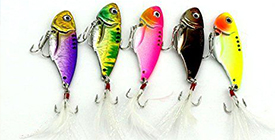
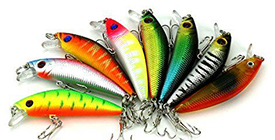
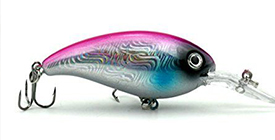

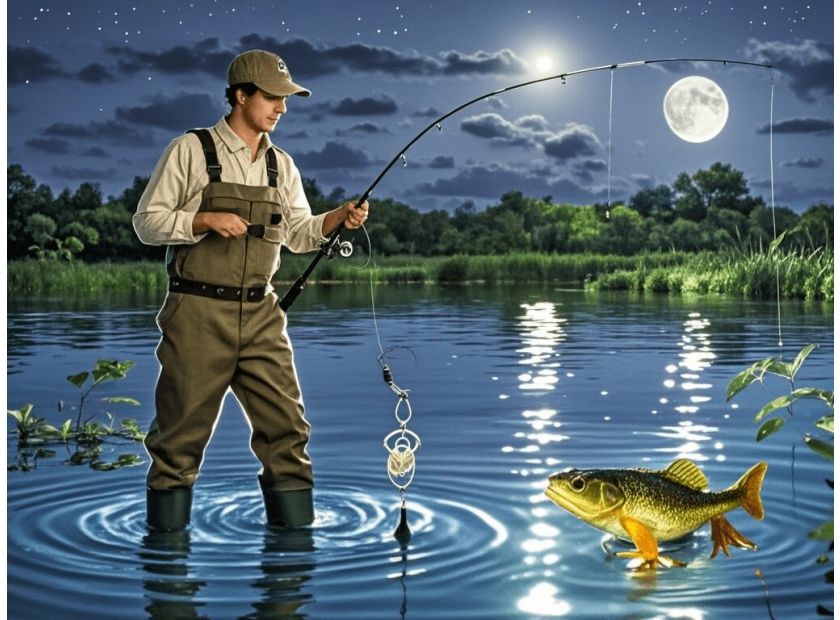
It was early May at Lake Okeechobee, Florida—sun just peeking over the sawgrass, humidity thick enough to sip, and water temp steady at 68°F. I’d been drifting for largemouth for three hours with live shiners, and the most action I’d gotten was a curious turtle. Honestly, I was ready to call it a morning and head to that little diner in Clewiston for pancakes. But then my buddy Jake, who’d been silent for most of the trip, gave a low whistle. “Try that new LENPABY crank lure I tossed in your tackle box last week,” he said. “These things are designed for when the fish are moody.” I rolled my eyes—how many “miracle lures” had I tried over the years? But I clipped on the bluegill-patterned crank and cast toward a patch of hydrilla. Two cranks down, the line zipped tight, and my rod bowed like it was going to snap. That largemouth was a solid 5-pounder, and it was just the first of six I’d catch before noon. Let me tell you, I’ve never apologized to a lure before, but that day I almost did.
Since that trip, crank lures have become my secret weapon—whether I’m chasing walleye in Lake Michigan, bass in Lake Texoma, or even striper in the Delaware River. And while I used to stick to the same old brands, I’ve found that LENPABY’s crank lures have a little something extra. Maybe it’s the way they wiggle at just the right speed, or the realistic paint jobs that fool even the wariest fish. Either way, they’ve earned a permanent spot in my tackle box. But here’s the thing: cranks aren’t a “throw-and-wait” lure. You have to know how to work them, and that’s what I want to break down for you. I’ll share my biggest wins, my most embarrassing fails, and the tips that’ve kept me catching fish when everyone else is packing up.
Why Crank Lures Work When Nothing Else Will
Let’s start with the basics: what makes a crank lure so effective? Well, for one, they mimic the movement of injured or fleeing baitfish—something every predator fish can’t resist. But it’s not just the action. The depth a crank runs at is key. Last summer, I was fishing for smallmouth in the Niagara River, New York. The water was clear, and I could see the smallmouth hanging just above a 12-foot drop-off. I tried a shallow crank first—it bounced off the rocks, but the fish didn’t even flinch. Then I switched to a medium-diving LENPABY crank that ran about 10 feet deep. On the second cast, a 3-pound smallmouth hit it so hard I thought I’d hooked a log. That’s the beauty of cranks: they let you target fish at specific depths without having to mess with weights or complicated rigs.
Another reason I love cranks? They cover water fast. When I’m on a new lake, say Lake Powell in Utah, I don’t waste time trying to find every single structure. I’ll cast a crank parallel to the shoreline, reel at a steady pace, and cover hundreds of yards in minutes. If I get a hit, I know I’ve found a spot worth focusing on. And if not? I just move on. It’s efficient, and it saves me hours of frustration. But here’s a mistake I’ve made more times than I’d like to admit: reeling too fast. I was fishing for walleye in Lake Erie last fall—water temp 58°F, overcast, and a light chop on the surface. I was using a deep-diving crank, reeling as fast as I could, and getting zero bites. Then a local guy named Tom came over and said, “Slow down, son. Walleye don’t chase fast in cold water.” I took his advice, reeled at half speed, and caught three walleye in the next hour. He was right. The speed of your retrieve changes everything with cranks.
My Go-To Crank Lure Styles for Every Scenario
LENPABY has a wide range of crank lures, and I’ve tested just about all of them. Here’s which ones I reach for in different situations:
Shallow-Diving Cranks (0-4 Feet)
These are my go-to for fishing around shoreline structures—like docks, submerged trees, or lily pads—in lakes like Lake Lanier, Georgia. The shallow-diving crank runs just under the surface, so it won’t get hung up as often (though let’s be real, I still manage to get it tangled in trees sometimes). I use this style most in spring, when bass are spawning and staying close to shore. Last April, I was fishing a cove in Lake Havasu, Arizona—water temp 62°F, sunny, with a gentle breeze. I cast a LENPABY shallow crank toward a submerged tree, reeled slowly, and let it bounce off the branches. On the third bounce, a 4-pound bass exploded out of the water and took off with my lure. The key here is to make the crank “tick” against the structure—that mimics an injured baitfish trying to escape, and it drives bass crazy.
Medium-Diving Cranks (5-12 Feet)
Medium-diving cranks are the most versatile, in my opinion. I use them for just about everything: bass in Lake Texoma, walleye in Lake Michigan, and even trout in the Great Smoky Mountains National Park. The key is to match the crank’s depth to the water you’re fishing. If you’re not sure how deep the fish are, start with a medium-diving crank and adjust from there. Last summer, I was fishing for crappie in Lake Seminole, Florida—water temp 72°F, overcast, and a light rain falling. I was using a small, silver LENPABY medium crank, reeling at a steady pace. I caught 12 crappie in an hour, all around 10 inches. The crappie were hanging at about 8 feet, and the crank was hitting that depth perfectly. I later tried a deeper crank, but it ran too far down and didn’t get any bites. Sometimes, simple is best.
Deep-Diving Cranks (13+ Feet)
Deep-diving cranks are for when the fish are holding in the depths—like in the winter, when water temp drops to 45°F in Lake Mead, Nevada. I use these cranks to target bass and striper that are hanging near underwater ledges, rock piles, or submerged bridges. But here’s a warning: deep-diving cranks are more likely to get hung up. I once lost three in an hour fishing a rock pile in Lake Tahoe, California. The water was crystal clear, and I could see the bass sitting just above the rocks, but every time I cast the crank, it got stuck. That’s when I learned to reel the crank in a little faster when it gets near rocks—just enough to lift it off the bottom but still keep it at the right depth. It took a little practice, but now I rarely lose a lure to structure when using a deep crank.
My Most Embarrassing Fail (And What I Learned From It)
Okay, let’s talk about a fail. Last year, I was fishing in a bass tournament on Lake Fork, Texas—water temp 70°F, sunny, and a light wind out of the north. I was confident I’d do well, since I’d been practicing for weeks and knew exactly where the bass were holding. I was using my favorite LENPABY crank—a green pumpkin pattern that had caught me dozens of bass before. I cast it toward a patch of submerged grass, reeled slowly, and felt a huge hit. I set the hook, and my rod bowed so far I thought it was going to snap. But then the line went slack. I reeled in, and the only thing left on my hook was the tail of the lure. The bass had bitten off half the crank. I was so mad, I threw the rest of the lure in the lake. But then I realized my mistake: I’d been using 10-pound test line, which was too light for that size bass. The fish had just bitten through it. I switched to 15-pound test, and the next time I got a hit, I landed a 6-pound bass that would’ve taken first place in the smallmouth category. Lesson learned: always match your line size to the fish you’re targeting. You can have the best lure in the world, but if your line is too light, you’re going to lose fish.
When to Switch to Something Else (And What to Use)
How to Choose the Right LENPABY Crank Lure for Your Trip
With so many crank lures to choose from, it can be overwhelming. But here are a few tips to help you pick the right one for your next trip:
- Match the depth to the fish’s location. If the fish are near the surface, use a shallow-diving crank. If they’re in the depths, use a deep-diving crank. And if you’re not sure, start with a medium-diving crank.
- Match the color to the water clarity. In clear water, use natural colors like green pumpkin or bluegill. In murky water, use bright colors like chartreuse or red.
- Match the size to the baitfish. If the baitfish are small (like minnows), use a small crank. If they’re larger (like shad), use a bigger crank.
- Check the action. Some cranks have a tight wiggle, while others have a wide wiggle. Tight wiggles are good for cold water, when fish are slower. Wide wiggles are good for warm water, when fish are more active.
I learned this the hard way when I was fishing for redfish in the Gulf of Mexico, Texas—water temp 75°F, clear, with a light chop on the surface. I was using a large crank with a wide wiggle, and I wasn’t getting any bites. Then I saw a school of small minnows jumping out of the water, and I realized my mistake. I switched to a small crank with a tight wiggle, and on the first cast, I caught a redfish. The small crank looked like the minnows the redfish were feeding on, and the tight wiggle was more natural in the cooler water.
Final Tip for Landing More Fish with Crank Lures
Okay, here’s my last tip—something that’s saved me more fish than any other trick I know. When you feel a hit, don’t just set the hook once. Reel in a little slack, and then set the hook again. Fish often “short-strike” crank lures—meaning they bite the tail or the body without getting the whole hook in their mouth. Reeling in slack and setting the hook again ensures that the hook goes all the way in, which means you’re less likely to lose the fish. I learned this from my dad, who’s been fishing for 40 years. He used to say, “A second hook set is like a second chance.” And he’s right. I’ve landed dozens of fish that I would’ve lost if I’d only set the hook once.
So, that’s my guide to crank lures. I hope you’ve learned something new, whether you’re a seasoned pro or a beginner. Remember, fishing isn’t about luck—it’s about knowing your lures, understanding the fish, and being willing to adapt. And if you ever get frustrated, just think back to my trip to Lake Okeechobee. Sometimes, the best fish come when you least expect them. Now go out there, try a LENPABY crank lure, and see what happens. And if you catch a big one, send me a photo—I’d love to see it.


