





I still remember that blustery March morning on Lake Okeechobee, Florida. The air smelled like damp pine and fish slime, and a steady 15-mile-per-hour wind was whipping the lake into frothy whitecaps that stung my cheeks.
My buddy Jake and I had been out since 5 a.m., throwing every soft plastic bait we could dig out of our tackle boxes. We’d seen a few bass break the surface chasing shad, but nothing had come tight on our lines.
By 10 a.m., Jake was muttering under his breath, ready to call it a day and head back to the dock for coffee. I was about to agree when I spotted a flash of silver in the tackle box—I’d forgotten about the Hard Baits crankbait my uncle had given me for Christmas. It was a deep-diving model with a chartreuse and black pattern, built tough enough to handle Okeechobee’s thick vegetation.
I tied it on, made a long cast into the wind, and began cranking it back at a steady pace. Within ten feet of the boat, the line went slack, then exploded into a run that nearly pulled the rod from my hands. After a five-minute battle, I hauled in a 6-pound largemouth bass that thrashed so hard it splashed Jake in the face. He stared at the fish, then at the crankbait, and shook his head.
That’s when I realized—crank lures aren’t just another piece of tackle. They’re a ticket to turning a slow day on the water into one you’ll remember for years.
## Why Crank Lures Work So Well
Honestly, let’s get real—crank lures are a game-changer for any angler, whether you’re fishing a tiny Texas pond or a massive lake like Michigan. Here’s why I rely on them year after year:
First off, they mimic the natural movement of baitfish so perfectly that bass can’t resist them. The wobble, the dive, the vibration—it’s all designed to trigger a bass’s predatory instincts. When you crank that lure through the water, you’re essentially saying, “Hey, dinner’s swimming by—come and get it.”
Another huge advantage is their versatility. You can use a shallow-diving crankbait to fish near the surface for bass chasing shad, or a deep-diving model to reach fish that are holding tight to the bottom in 20 feet of water. I’ve caught bass on crank lures in every season, from the freezing cold of January to the sweltering heat of July.
And let’s not forget durability. Unlike soft plastics that get torn up after every fish, Freshwater Systems crank lures are built tough. I’ve caught dozens of bass on the same crankbait, and it still runs true every time I tie it on. That’s a big deal when you’re out on the water—you don’t want to be constantly retying baits.
## Choosing the Right Crank Lure for the Job
Okay, so you know crank lures work—now, how do you choose the right one for your next fishing trip? Let me tell you, this is where most anglers go wrong. They buy a handful of random crankbaits and throw them out hoping for the best. That’s not a strategy—it’s a waste of time and money.
Instead, you need to match the crankbait to the conditions you’re fishing. Here are a few tips that have helped me catch more bass over the years:
**1. Match the Baitfish**
Bass eat what’s available, so take a look at the shad, bluegill, or other baitfish in your lake. If the shad are silver and small, choose a crankbait that’s silver and 3 to 4 inches long. If the bluegill are green and fat, go with a green or brown crankbait with a wide profile.
For example, on Lake Texoma, Oklahoma, the shad are silver and about 2 inches long. I use a shallow-diving crankbait with a silver and black pattern, and I catch bass after bass. On Lake Lanier, Georgia, where bluegill are abundant, I switch to a green and brown crankbait that looks like a small bluegill.
**2. Pay Attention to Depth**
This is probably the most important factor when choosing a crankbait. If the bass are holding in 5 feet of water, a deep-diving crankbait that goes down to 20 feet won’t do you any good. You’ll just be dragging it through the mud and vegetation, and you’ll miss all the fish.
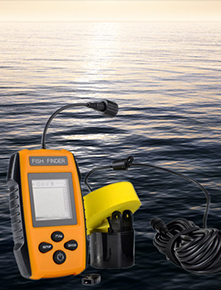
I always check my sonar before I start fishing to see where the bass are holding. On Lake Okeechobee, during the spring, the bass are usually in 3 to 8 feet of water, so I use a shallow-diving crankbait. In the summer, they move to 10 to 15 feet, so I switch to a medium-diving model.
**3. Consider the Weather**
Wind and clouds can affect bass behavior, so you need to adjust your crankbait choice accordingly. On bright, sunny days, bass tend to hold tight to cover like docks or tree lines, so I use a crankbait with a tight wobble that’s less visible. On cloudy, windy days, they’re more active and will chase faster-moving baits, so I use a crankbait with a wide wobble.
For example, on a sunny day at Lake Travis, Texas, I use a black and blue crankbait that blends in with the shadows under the docks. On a cloudy day at Lake Michigan, I use a bright yellow crankbait that’s easy to see in the murky water.
## Fishing Crank Lures Like a Pro
Now that you know how to choose the right crankbait, let’s talk about how to fish it effectively. There’s a lot more to it than just casting and cranking. Here are the techniques I use to catch big bass:
**1. Vary Your Retrieve Speed**
Don’t just crank the lure back at the same speed every time. Try speeding it up, slowing it down, or pausing it every few feet. Bass love a bait that looks like it’s injured or struggling, so a pause in your retrieve can trigger a strike.
**2. Fish the Cover**
Bass love to hide in cover—weeds, rocks, tree stumps, docks, you name it. That’s where they wait to ambush their prey, so you need to get your crankbait into those areas. But be careful—you’ll lose a lot of crankbaits to cover if you’re not careful.
**3. Use the Right Gear**
You can have the best crankbait in the world, but if you’re using the wrong gear, you won’t catch any fish. Here’s what I recommend:
- **Rod:** A medium-heavy to heavy-action rod with a fast tip. This will give you the power to set the hook when the bass strikes, and the fast tip will help you feel the lure’s wobble.
- **Reel:** A baitcasting reel with a high gear ratio (6.4:1 or higher). This will help you crank the lure back at a steady pace, and it will make it easier to reel in fast-running bass.
- **Line:** A 10- to 14-pound monofilament or fluorocarbon line. Fluorocarbon is more sensitive, but monofilament is more forgiving if you get snagged.
## My Most Memorable Crank Lure Failures (And What I Learned)
I’ll be honest—for every big bass I’ve caught on a crankbait, I’ve had my share of failures. But those failures have taught me more than any success ever could. Here are a few of my most memorable ones:
**1. The Day I Forgot to Check the Depth**
I was fishing at Lake Travis, Texas, one summer day. The sun was beating down, and the water temperature was 85°F. I decided to use a deep-diving crankbait, thinking the bass would be holding in deep water.
I cast it out, started cranking, and within a few seconds, I felt a snag. I tried to pull it free, but it was stuck fast. After a few minutes of struggling, I lost the crankbait. I was frustrated, but I kept fishing.
A few hours later, I decided to check my sonar. I was shocked to see that the bass were holding in only 3 to 5 feet of water. I’d been fishing too deep the entire time. I switched to a shallow-diving crankbait, and within 20 minutes, I had caught three bass.
The lesson here—always check your depth before you start fishing. Don’t assume you know where the bass are holding.
**2. The Time I Used the Wrong Color**
I was fishing at Lake Michigan, Illinois, in the fall. The water was clear, and the bass were chasing shad that were about 2 inches long. I used a bright orange crankbait, thinking it would be easy to see in the murky water.
I fished for two hours without a single strike. I was about to give up when I noticed a group of shad jumping out of the water. They were silver and black, not orange. I switched to a silver and black crankbait, and within five minutes, I had a 4-pound bass on the line.
The lesson here—always match the crankbait’s color to the baitfish. If the shad are silver and black, use a silver and black crankbait.
**3. The Day I Cranked Too Fast**
I was fishing at Lake Lanier, Georgia, in the spring. The water temperature was 65°F, and the bass were in spawning mode. I was using a shallow-diving crankbait, and I was cranking it back as fast as I could.
I fished for three hours without a strike. I was confused—there were bass everywhere, but they weren’t biting my crankbait. I decided to slow down my retrieve, and within 10 minutes, I had a 5-pound bass on the line.
The lesson here—slow down your retrieve in cold water. Bass are less active in cold water, and they won’t chase fast-moving baits.
Crank lures are a powerful tool for any angler, and they’re especially effective for catching bass. By choosing the right crankbait for the conditions, using the right techniques, and learning from your failures, you can catch more bass and turn your fishing trips into unforgettable adventures.
## Actionable Tip
Here’s a small, actionable tip that will help you catch more bass: Before you start fishing, take a look at the water temperature. If it’s below 60°F, use a slow retrieve with a tight-wobble crankbait. If it’s above 60°F, use a fast retrieve with a wide-wobble crankbait. Trust me—it works.
- Hard Lures
-
Minnow Lures
Popper Lures
Penceil Vib Lures
-
- Soft Lures
-
Soft Lures
Spoon Lures

-
- Fishing Set
-
Fishing Set 5pcs
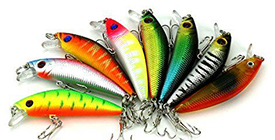
Fishing Set 8pcs
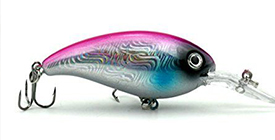
Fishing Set 10pcs
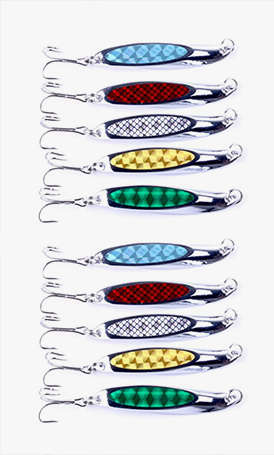
-
- Lures Category
- New Lures
- fishing baits
-
Language  English
English

