




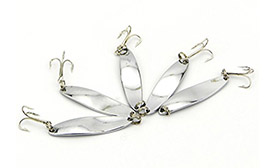
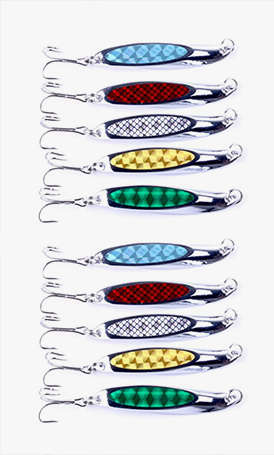

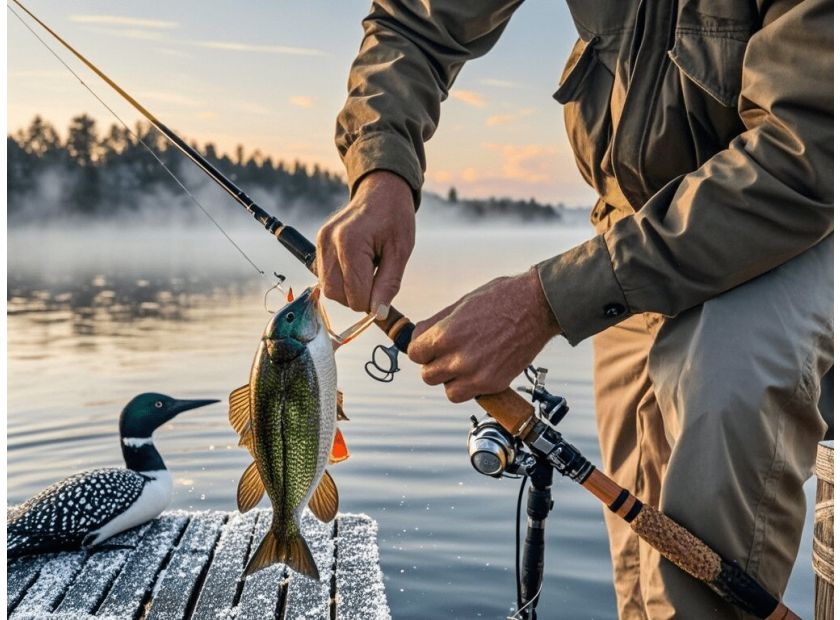
Let me tell you, back in August of 2019, I was out on Lake Texoma at 5:30 AM. The sky was that soft pink hue that makes you forget about everything else, and the wind was just a gentle breeze pushing little ripples across the surface. I’d been planning this trip for weeks, dreaming of hooking a big striped bass—Texoma’s famous “stripers.” I was using a Saltwater Systems rod and reel combo I’d just picked up, feeling pretty confident. I cast out a shiny silver metal lure and waited. For an hour, I didn’t get a single bite. The water temp was 72°F, which should have been perfect, but nothing was hitting.
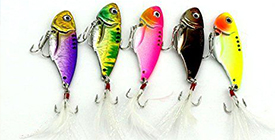
I was starting to get frustrated, thinking maybe I’d picked the wrong spot. Then I remembered a tip my old fishing buddy down in Florida had told me—sometimes, stripers go crazy for lures that mimic injured baitfish. I reached into my tackle box and grabbed a slightly dented golden metal lure from LENPABY. I cast it out again, reeling it in with short, jerky movements like a fish struggling to swim. Within two minutes, my rod bent like a bow. That fight was one for the books—20 minutes of back-and-forth, my arms burning, the striper leaping out of the water like it was trying to fly. When I finally landed it, it weighed 15 pounds. That moment changed everything I thought I knew about metal lures.
Why Metal Lures Are My Go-To
Honestly, before that day on Texoma, I was a die-hard plastic lure guy. I thought they looked more realistic, so they must work better. But that golden LENPABY lure taught me otherwise. Metal lures have this unbeatable flash that catches fish’s attention from miles away—especially on sunny days when the light hits that chrome or gold just right. When the water’s clear, like it was at Okeechobee last spring, that flash is like a dinner bell for bass and pike.
Another thing I love about metal lures is their versatility. You can use them in freshwater lakes like Michigan or saltwater bays along the Texas coast. I took one to the Gulf of Mexico near Corpus Christi last summer, and I was pulling in redfish left and right. The way the lure sinks quickly to the bottom—where the big ones hide—saved me so much time. No more waiting for a plastic worm to drift down. Just cast, let it sink for a few seconds, and reel it in with a steady retrieve.
Let’s talk about durability too. I’ve lost count of how many plastic lures I’ve torn up on sharp rocks or fish with big teeth. But metal lures? They take a beating and keep on going. That same golden lure I used on Texoma? It’s still in my tackle box today, with a few more dents, but it still catches fish. LENPABY makes some of the toughest metal lures I’ve ever used—they don’t bend or break even when you’re fighting a monster.
The Best LENPABY Metal Lures for Freshwater
When it comes to freshwater fishing, I’ve got a few favorites from LENPABY. The golden one I used on Texoma is the “Golden Striper” model. It’s perfect for stripers and largemouth bass in lakes like Texoma and Okeechobee. The water temp that day was 72°F, and that lure just seemed to match what the stripers were eating—small shad. I’ve also had great luck with the silver “Silver Pike” model in Michigan’s cold, clear lakes. When the water temp drops to 55°F in early spring, that silver flash drives pike wild.
Another freshwater winner is the “Bronze Bass” lure. I used this one last fall at Lake Travis near Austin, Texas. The water was 68°F, and the bass were feeding on crawfish. The bronze color mimicked those crawfish perfectly, and I caught three bass over 10 pounds in one afternoon. The key was to reel it in slowly, letting it bounce off the bottom. The lure’s weight made it easy to feel when it hit a rock or log, which is where the bass were hiding.
My Go-To LENPABY Metal Lures for Saltwater
For saltwater fishing, LENPABY’s metal lures are a game-changer. Last year, I took a trip to Galveston Bay, Texas, using the “Chrome Redfish” model. The water was 78°F, and the redfish were schooling near the jetties. That chrome lure had this incredible flash that stood out even in the murky bay water. I was casting and reeling in redfish every five minutes—it was insane.
I also love the “Blue Sardine” lure for offshore fishing. I used this one on a deep-sea trip out of Port Aransas, Texas. We were in 200 feet of water, and the water temp was 80°F. The blue and silver color mimicked the sardines that tuna and mackerel love. I hooked a 30-pound tuna within 10 minutes of casting. The lure’s weight made it easy to get down to the tuna’s feeding zone, and the flash brought them right to the surface.
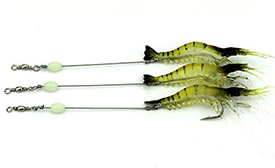
And let’s not forget about Squid Jigs—a type of metal lure I never leave home without. I used one last spring off the coast of Florida near Pensacola. The water temp was 70°F, and the squid were everywhere. Those jigs have these little tentacles that wiggle in the water, and the squid just can’t resist them. I caught enough squid for a fish fry that night—they were delicious.
Mistakes I’ve Made with Metal Lures (and How to Fix Them)
I’m not going to pretend I’m perfect—far from it. I’ve made some big mistakes with metal lures over the years. One of the biggest was on Lake Michigan a few years ago. I was using a heavy metal lure, and I cast it too hard. The line snapped, and I lost the lure—and the big pike that was chasing it. Now, I always check my line for frays before I cast, and I use a heavier line when I’m using big metal lures.
Another mistake was not varying my retrieve speed. I used to reel in at the same speed every time, and I wondered why I wasn’t catching more fish. Then, on a trip to Lake Okeechobee, I noticed that when I reeled in fast, the bass hit the lure harder. But when I slowed down, the pike were more interested. Now, I mix it up—fast retrieves for bass, slow for pike. It makes a huge difference.
Let me share one more failure. Last summer, I was fishing in the Trinity River near Dallas, Texas. The water was 85°F, and it was so murky you could barely see your hand in front of your face. I was using a shiny silver lure, and I didn’t get a single bite. I realized later that in murky water, fish rely more on smell and vibration than sight. So, I switched to a black LENPABY lure with a rattle, and I started catching catfish within minutes. The rattle sent vibrations through the water, and the black color stood out in the murk.
My Favorite LENPABY Metal Lure Fishing Spots
I’ve traveled all over the US fishing with metal lures, and some spots are just unbeatable. Let’s start with Lake Texoma on the Texas-Oklahoma border. The water temp there stays around 70-75°F in summer, and the stripers are always looking for a shiny meal. I like to fish near the dam—where the water’s deeper—with a golden LENPABY lure. Last July, I caught five stripers over 12 pounds in one morning.
Another spot I love is Lake Okeechobee in Florida. The water’s warm year-round—around 78-85°F—and the bass are huge. I use a bronze LENPABY lure near the weed beds, reeling it in slowly. The bass hide in the weeds, waiting for something to swim by. When that bronze lure comes through, they strike like lightning. I caught a 14-pound bass there last March—it’s still the biggest one I’ve ever landed.
For saltwater, the Gulf of Mexico near Corpus Christi is hard to beat. The water temp is around 80°F in summer, and the redfish are in the bays and jetties. I use a chrome LENPABY lure, casting it near the shoreline where the redfish feed on crabs and shrimp. The flash of the lure attracts them, and the quick sink gets it to the bottom where they hide. I’ve had days where I’ve caught 20+ redfish there—all on that same chrome lure.
And let’s not forget about the Atlantic coast near Myrtle Beach, South Carolina. I went there last fall, and I was using a blue and silver LENPABY lure for king mackerel. The water was 70°F, and the mackerel were schooled up just off the coast. I cast the lure out, let it sink for a few seconds, and reeled it in fast. The mackerel hit it so hard, my rod almost flew out of my hand. I caught three king mackerel that day—all over 20 pounds.
How to Choose the Right LENPABY Metal Lure
Choosing the right metal lure can be tricky, but with a little practice, it gets easier. The first thing I look at is the color. Chrome or silver works best in clear water or on sunny days, when the light hits the lure and creates that unbeatable flash. Gold or bronze is better in murky water or on cloudy days, when the fish can’t see as well. The darker color stands out, and the bronze mimics crawfish or other bottom-dwelling creatures.
Next, consider the weight. Heavier lures are great for deep water—like in Lake Michigan or the Gulf of Mexico. They sink quickly, so you don’t waste time waiting for them to get to the bottom. Lighter lures are better for shallow water, like the bays near Corpus Christi. They stay near the surface, where bass and redfish are feeding.
My Top LENPABY Metal Lure Fishing Tips
Another tip is to use a swivel. Metal lures can cause your line to twist, which weakens it and makes your casts shorter. A small swivel between your line and the lure solves that problem. I always use a 10-15 pound swivel—light enough to not affect the lure’s action, but strong enough to handle big fish.
Final Thoughts
From that early morning on Texoma to the deep-sea adventures in the Gulf, metal lures have become my most trusted fishing companions. LENPABY’s selection—from the golden striper lure to the chrome redfish model—has never let me down. Their durability, versatility, and unbeatable flash make them a must-have for any angler, whether you’re a beginner or a seasoned pro.
So, if you’re looking to up your fishing game, give LENPABY metal lures a try. I promise you won’t be disappointed. Just remember—match the color to the baitfish, vary your retrieve speed, and don’t be afraid to experiment. With a little practice, you’ll be catching fish like a pro in no time.
One last thing: next time you’re out on the water, bring a few Squid Jigs too. They’re perfect for those days when the fish are in a bad mood—their wiggling tentacles are hard to resist. I used one at Lake Okeechobee last winter when the bass were nowhere to be found, and I ended up catching a bucketful of crappie. You never know when squid jigs will save the day.
And now, my actionable tip for you: next time you go fishing, leave your plastic lures at home and bring only three LENPABY metal lures—chrome, gold, and bronze. Try them all in different spots and retrieve speeds. I guarantee you’ll catch more fish than you ever did with plastic. Give it a shot—you won’t regret it.


