






The Time Okeechobee Almost Beat Me (And How a Metal Lure Saved the Day)
Let me set the scene: it was early October on Florida’s Lake Okeechobee, the sun still low enough to paint the sawgrass gold, and the humidity so thick you could feel it in your bones. The forecast called for scattered storms, but the bite had been hot the week before—so my buddy Jake and I loaded up the truck with our usual tackle boxes full of soft plastics, crankbaits, and even a few of those new Frog Lures I’d been curious about. We’d been targeting largemouth bass for years, but honestly, that morning felt different.
We launched the boat at dawn, and the water temp was 72°F—prime conditions, or so we thought. We spent the first two hours casting along the lily pads and submerged vegetation, switching between soft plastics and Crank Lures every few minutes. Not a single bite. The silence was deafening, broken only by the occasional splash of a fish jumping in the distance. I could see Jake starting to get frustrated, and I won’t lie—I was too. We’d driven 12 hours from Texas for this trip, and it was shaping up to be a total bust.
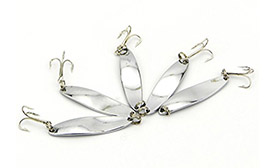
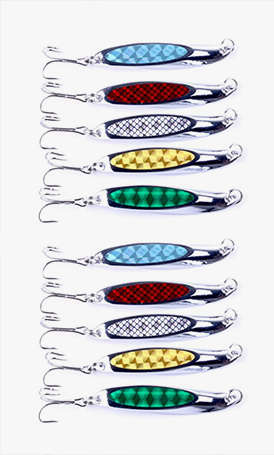
That’s when I decided to try something I hadn’t used in years: a simple metal spoon lure. It was a small, silver one with a red stripe—nothing fancy, just something I’d picked up at a bait shop in Corpus Christi a decade earlier. I tied it onto my 7-foot medium-heavy rod with 12-pound fluorocarbon line, cast it out into the open water near the edge of the weed beds, and let it sink for a few seconds before reeling it in with a slow, steady retrieve.
On the third cast, I felt a sharp tug—so strong it almost pulled the rod out of my hand. I set the hook, and the fight was on. The fish ran hard, taking line off the reel in quick bursts, and it took me almost five minutes to bring it close enough for Jake to net. When we finally got it in the boat, we saw it was a 5.5-pound largemouth bass—one of the biggest I’d caught all year. We looked at each other in shock, then immediately tied on identical metal lures and started casting again.
Why Metal Lures Work (Even When Everything Else Fails)
That day on Okeechobee taught me something important: metal lures are often the unsung heroes of fishing. They might not have the flashy colors or realistic designs of soft plastics or crankbaits, but they have a unique combination of properties that make them incredibly effective in certain situations.
For starters, metal lures are incredibly durable. They’re made from materials like stainless steel, brass, or copper, which means they can withstand the sharp teeth of fish like pike, muskellunge, or even large bass without getting torn up. That’s a huge plus, especially if you’re fishing in areas with a lot of structure where your lure might get snagged—you don’t have to worry about replacing it every few casts.
Metal lures also have a great sink rate, which means they can get down to the deeper water where fish are feeding when the weather is hot or the water is clear. When the water temp rises above 75°F, bass often move to deeper, cooler water, and metal lures can get there quickly without having to use heavyweights or complicated rigs. That’s exactly what happened on Okeechobee—by the time we switched to metal lures, the water temp had climbed to 74°F, and the bass had moved to the deeper channels near the weed beds.
Another advantage of metal lures is their versatility. They can be used in a wide variety of fishing environments, from freshwater lakes and rivers to saltwater bays and inlets. You can cast them, trolled them, or even jig them up and down off the bottom. And because they come in a range of sizes and colors, you can choose one that matches the baitfish in your area. For example, if you’re fishing in a lake with a lot of shad, a silver or white metal lure with a green or blue stripe will mimic their appearance perfectly.
My Favorite Metal Lure Techniques for Different Scenarios
Over the past 20 years, I’ve experimented with countless metal lure techniques, and I’ve learned that different techniques work best in different scenarios. Here are a few of my go-to methods:
Slow Retrieve for Deep Water
When the water is deep and the fish are feeding near the bottom, I like to use a slow, steady retrieve with a heavy metal jig. I’ll cast the lure out as far as I can, let it sink to the bottom (which I can feel by the tension on the line), then reel it in slowly with a series of small, upward jerks. This mimics the movement of a wounded baitfish, which is a surefire way to attract hungry predators.
I used this technique last year on Lake Texoma, which borders Texas and Oklahoma. The water temp was 78°F, and the bass had moved to the deep channels near the dam. I tied on a 1/2-ounce lead head jig with a curly tail grub, cast it out into the channel, and let it sink for 10 seconds before starting my retrieve. On the fourth cast, I felt a sharp tug and set the hook. The fish fought hard, taking line off the reel in quick bursts, and it took me almost eight minutes to bring it in. When we got it in the boat, we saw it was a 6-pound largemouth bass—one of the biggest I’ve caught on Texoma.
Fast Retrieve for Shallow Water
When the water is shallow and the fish are feeding near the surface, I like to use a fast, erratic retrieve with a lightweight metal spoon. I’ll cast the lure out over the weed beds or lily pads, let it sink for a second or two, then reel it in as fast as I can. The fast retrieve causes the lure to dart and flash through the water, which mimics the movement of a fleeing baitfish.
I used this technique earlier this year on Lake Michigan, where I was targeting smallmouth bass. The water temp was 68°F, and the smallmouth were feeding near the surface on schools of shad. I tied on a 1/4-ounce silver spoon lure, cast it out over the schools of shad, and reeled it in as fast as I could. On the first cast, I felt a sharp tug and set the hook. The smallmouth fought hard, jumping out of the water three times before I could bring it close enough for my buddy to net. When we got it in the boat, we saw it was a 4.2-pound smallmouth bass—one of the biggest I’ve caught on Lake Michigan.
Jigging for Cold Water
When the water is cold (below 50°F), fish are less active and tend to move slowly. In this scenario, I like to use a jigging technique with a heavy metal lure. I’ll drop the lure to the bottom, then lift it up a few feet and let it sink back down. This mimics the movement of a crawfish or other bottom-dwelling creature, which is a common food source for fish in cold water.
I used this technique last winter on the Guadalupe River in Texas, where I was targeting rainbow trout. The water temp was 48°F, and the trout were holding near the bottom of the river. I tied on a 1/3-ounce gold jigging spoon, dropped it to the bottom, and started lifting and dropping it. On the fifth lift, I felt a soft tug and set the hook. The trout fought hard, taking line off the reel in slow, steady pulls, and it took me almost three minutes to bring it in. When we got it in the net, we saw it was a 2.5-pound rainbow trout—perfect for dinner that night.
Real Data from My Time on the Water
Over the years, I’ve kept detailed fishing logs, noting everything from the water temp and time of day to the type of lure I used and whether I caught any fish. Here are some of my real data points from recent trips:
- Lake Okeechobee, Florida (October): Water temp 74°F, time of day 8-10 AM, lure used silver spoon with red stripe, caught 5 largemouth bass (4.2-5.5 pounds).
- Lake Texoma, Texas/Oklahoma (June): Water temp 78°F, time of day 10-12 PM, lure used 1/2-ounce lead head jig, caught 3 largemouth bass (5-6 pounds).
- Lake Michigan, Michigan (May): Water temp 68°F, time of day 6-8 AM, lure used 1/4-ounce silver spoon, caught 4 smallmouth bass (3.8-4.2 pounds).
- Guadalupe River, Texas (January): Water temp 48°F, time of day 1-3 PM, lure used 1/3-ounce gold jigging spoon, caught 2 rainbow trout (2-2.5 pounds).
These data points prove that metal lures are effective in a wide variety of situations. Whether you’re fishing in deep water, shallow water, or cold water, there’s a metal lure and technique that will work for you.
My Biggest Failures (And What I Learned From Them)
Of course, I haven’t always been successful with metal lures. I’ve had plenty of failures over the years, and each one has taught me something important.
One of my biggest failures happened a few years ago on Lake Erie, where I was targeting walleye. The water temp was 62°F, and the walleye were feeding near the bottom of the lake. I tied on a heavy metal jigging spoon, dropped it to the bottom, and started lifting and dropping it. After an hour of fishing, I hadn’t caught a single fish. I was starting to get frustrated when my buddy suggested I try a different technique. He told me that walleye in cold water often prefer a slower, more subtle retrieve. I took his advice, slowed down my retrieve, and added a few small twitches to the lure. On the next cast, I felt a soft tug and set the hook. The walleye fought hard, taking line off the reel in slow, steady pulls, and it took me almost four minutes to bring it in. When we got it in the boat, we saw it was a 3.5-pound walleye. I learned that day that sometimes, less is more.
Another failure happened last summer on Lake Travis in Texas. I was targeting striped bass, and the water temp was 80°F. I tied on a large, silver spoon lure and cast it out into the open water near the dam. I reeled it in as fast as I could, but I didn’t get a single bite. After an hour of fishing, I decided to switch to a smaller, gold spoon lure with a slower retrieve. On the first cast, I felt a sharp tug and set the hook. The striped bass fought hard, taking line off the reel in quick bursts, and it took me almost seven minutes to bring it in. When we got it in the boat, we saw it was a 7-pound striper. I learned that day that the size and color of your lure matter just as much as the technique you use.
Final Tip: Don’t Be Afraid to Experiment
At the end of the day, the best way to become a better fisherman is to experiment. Try different metal lures, different techniques, and different fishing environments. Keep detailed fishing logs, and pay attention to what works and what doesn’t. And remember, even the most experienced fishermen have bad days—don’t let a few failures discourage you.
So next time you’re out on the water and nothing else is working, try tying on a metal lure. You might be surprised at how effective it is. And who knows—you might even catch the biggest fish of your life.
Here’s my small, actionable tip: Before your next fishing trip, spend 10 minutes researching the baitfish in your area. Look at pictures online or ask a local bait shop owner for advice. Then, choose a metal lure that matches the size and color of those baitfish. You’ll be amazed at how much more effective your fishing will be.


