






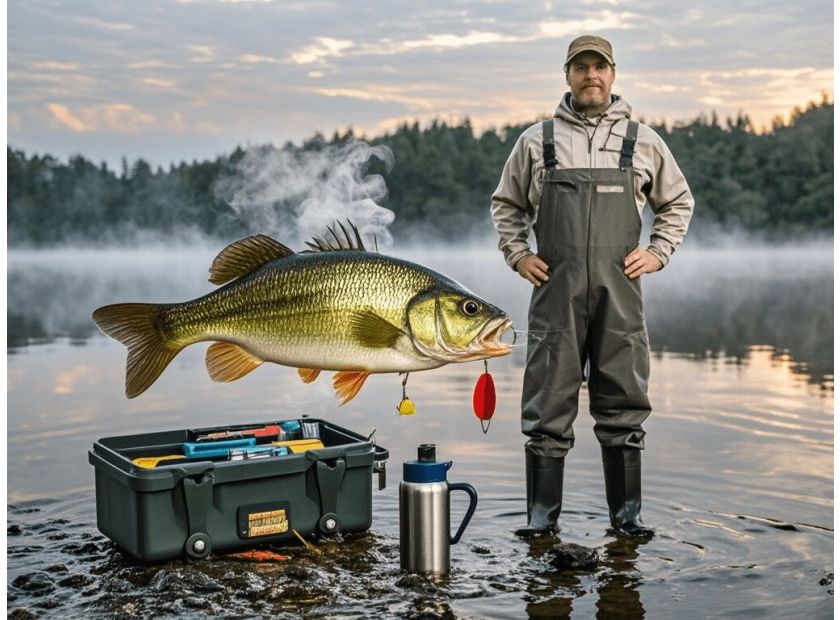
Okay, let’s set the scene: it’s 6:30 a.m. on a mid-July morning at Lake Okeechobee in Florida. The air’s so thick with humidity you could almost chew it, and there’s a light fog hovering just above the lily pads. I’m in my beat-up 19-foot bass boat, sipping coffee from a chipped mug, and my buddy Jake is already muttering about how we’re late for the frog bite.
The First Time I Tried a Frog Lure
Jake’s been on me for weeks to try frog lures. I’m a creature of habit—always reaching for my trusty crankbait or spinnerbait. But that morning, he practically shoves a colorful frog in my hand and says, “Just throw it into the thick stuff. Trust me.”
I cast it into a dense patch of lily pads. I give it a few twitches, and nothing happens. I’m about to reel it in and go back to my crankbait when a bass explodes through the surface, grabs the frog, and takes off like a rocket. The water splashes all over my face, and my heart’s racing so fast I can barely hear Jake laughing beside me.
That day, we caught 12 bass between us, all on frog lures. The water temp was 78°F, and the bite was hottest between 6:30 and 8:00 a.m. Before that trip, I thought frog lures were just a fad. Now, they’re a staple in my tackle box.
Why Frog Lures Work So Well
Let’s talk about why frogs are such killers for bass. First off, they look like real frogs—those bulging eyes, the realistic legs, the way they sit on top of the water. Bass love frogs. They’re a natural prey item, especially in shallow, weedy waters.
Another reason is their ability to float. You can fish them in areas where other lures would get tangled—thick lily pads, hydrilla, or grass beds. When you twitch a frog, it mimics a real frog hopping across the surface, which drives bass crazy. They can’t resist attacking something that looks so vulnerable.
Plus, frog lures are versatile. You can fish them slow or fast, depending on the conditions. On that day at Lake Okeechobee, we fished them slow because the water was calm and the bass were feeding shallow. But on other days, a faster retrieve works better, especially if there’s a breeze.
Frog Lures vs. Other Topwater Lures
I’ve fished with just about every topwater lure out there—poppers, buzzbaits, and walk-the-dog lures. But frog lures are my favorite for a few reasons.
Popper Lures are great for making a commotion, but they tend to get tangled in thick vegetation. Frog lures, on the other hand, sit on top of the weeds, so they’re less likely to get stuck.
Buzzbaits are effective, but they’re not as realistic as frogs. Bass can sometimes tell the difference between a real frog and a buzzbait, especially if the water is clear.
Walk-the-dog lures work well in open water, but they’re useless in dense weeds. That’s where frog lures shine.
My Favorite Frog Lure
Over the years, I’ve tried a lot of frog lures. But the one that I keep going back to is the LENPABY frog. It has a realistic design, durable construction, and a hook that’s sharp enough to penetrate even the thickest bass lips.
The first time I used a LENPABY frog, I was at Lake Texoma in Texas. The water temp was 75°F, and we were fishing near some cypress trees. I cast the frog into a patch of weeds, gave it a few twitches, and a bass hit it so hard my rod almost went into the water.
What I love about the LENPABY frog is its versatility. You can fish it in just about any shallow water condition—lily pads, hydrilla, or grass beds. Plus, it’s durable enough to withstand multiple hits without falling apart.
How to Rig a Frog Lure
Rigging a frog lure is simple. Most frogs come pre-rigged with a hook, but I like to check the hook sharpness before every trip. If it’s not sharp, I replace it with a new one.
You also need to make sure the frog is balanced. If it’s not, it won’t float properly. To test the balance, just place the frog in a bucket of water. If it sits upright, it’s balanced. If not, you can adjust the weight inside the frog.
Another thing to remember is to use a heavy-duty fishing line. I recommend using a braided line that’s at least 30 pounds. The braided line is strong enough to pull a bass out of thick weeds without breaking.
My Frog Lure Failures
I know I made it sound like frog lures are a magic bullet, but they’re not. I’ve had plenty of failures with frogs too. Let me tell you about one of the worst days I ever had with a frog lure.
It was a hot August afternoon at Lake Michigan. The water temp was 82°F, and we were fishing near a weed bed. I cast my frog into the weeds, gave it a few twitches, and nothing happened. I tried again, and nothing. After about an hour of no bites, I decided to switch to a spinnerbait. Within 10 minutes, I caught a bass.
What went wrong that day? Well, for one, we were fishing too late in the day. The frog bite is usually best in the early morning or late evening when the water is cooler. Also, the water was too clear. Bass are more cautious in clear water, so they’re less likely to attack a frog that’s sitting on the surface.
Another failure was at Lake Erie. I was fishing in a grass bed, and every time I cast my frog into the weeds, it would get tangled. I kept trying, but after about 20 minutes, I gave up. The problem was that the grass bed was too thick. I should have moved to a more open area where the frog could float freely.
Tips for Fishing with Frog Lures
Fourth, use a heavy-duty fishing rod and reel. The bass that hit frog lures are usually big and strong, so you need a rod and reel that can handle the fight. I recommend using a rod that’s at least 7 feet long and a reel with a high gear ratio.
Fifth, don’t be afraid to experiment. Try different colors, sizes, and retrieves. Sometimes a small, natural-colored frog works best, and other times a big, bright-colored frog is what the bass are looking for.
My Go-To Fishing Set
When I’m fishing with frog lures, I always use my favorite Fishing Set. The rod is 7 feet long and has a medium-heavy power and fast action. This allows me to cast the frog into thick vegetation and set the hook quickly when a bass hits.
The reel is a baitcasting reel with a high gear ratio. This makes it easy to reel in the frog quickly when it gets tangled in weeds. The line is braided, which is strong enough to pull a bass out of thick weeds without breaking.
I’ve used this fishing set on many trips—from Lake Okeechobee to Lake Michigan—and it’s never let me down. It’s durable, reliable, and perfect for frog fishing.
More Great Fishing Spots for Frogs
Frog lures work in a variety of water bodies across the US. Here are some of my favorite spots to fish with frog lures:
- Lake Okeechobee, Florida: This is where I first tried a frog lure, and it’s still one of my favorite spots. The lake has a lot of lily pads and hydrilla, which is perfect for frog fishing. The best time to fish here is early in the morning.
- Lake Texoma, Texas: The cypress trees and grass beds around this lake make it a great spot for frogs. The water is usually clear, so I like to use a natural-colored frog here.
- Lake Erie, Ohio: The weed beds along the shoreline are perfect for frog lures. The best time to fish here is late in the evening.
- Lake Michigan, Michigan: The shallow areas around the lake are great for frog fishing. The best time to fish here is early in the morning or late in the evening.
- Mississippi River, Minnesota: The backwaters of the Mississippi River are filled with lily pads and grass beds. This is a great spot for frogs in the spring and summer.
What to Look for in a Frog Lure
Fourth, you want a frog that’s easy to rig. Most frogs come pre-rigged, but it’s still a good idea to check the hook sharpness before every trip.
Final Thoughts
Frog lures are a great addition to any bass angler’s tackle box. They’re versatile, effective, and a lot of fun to fish with. The key to success with frog lures is to fish them in the right conditions and use the right technique.
So, the next time you’re out on the water, grab a frog lure and give it a try. You might be surprised at how well it works. And if you’re looking for a great frog lure to start with, check out the LENPABY frog. It’s my favorite, and I think you’ll love it too.
Actionable Tip: If you’re new to frog fishing, start by practicing your retrieve in a calm, shallow area. Try to mimic the movements of a real frog, and remember to pause between twitches. This will help you get a feel for how the frog works and increase your chances of catching a bass.


